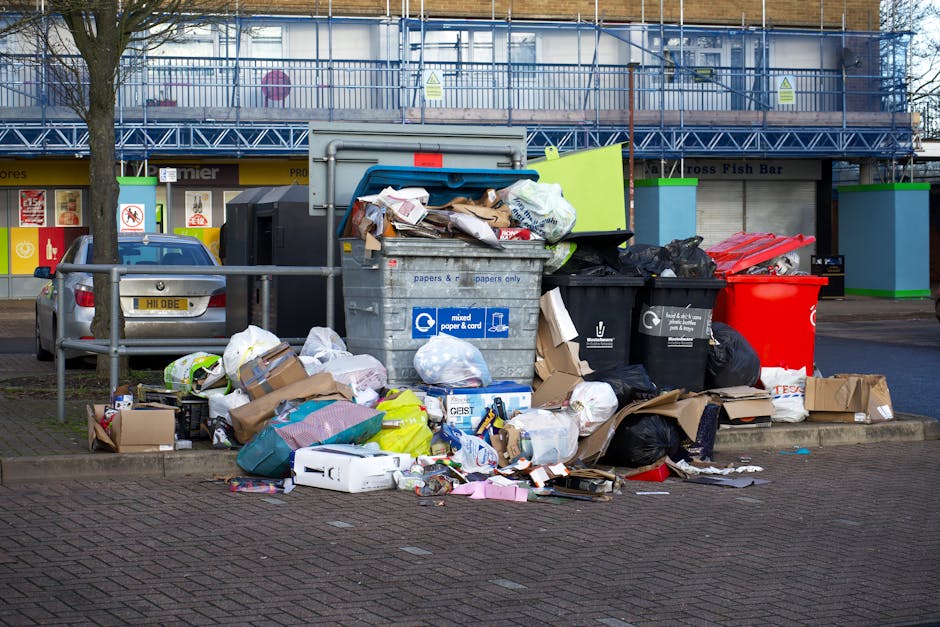
Avoid hidden charges in Hammersmith rubbish clearance quotes

If you are trying to avoid hidden charges in Hammersmith rubbish clearance quotes, you are not alone. A lot of people only spot the extra costs after the team has turned up, the van is half full, and the pressure is on. That is a horrible moment, especially if you just wanted a quick, tidy clearance and a fair price.
This guide breaks down how quotes should work, where surprise fees usually hide, and what to ask before you book. It is written for anyone arranging rubbish clearance, furniture disposal, a flat or house clearance, or even a one-off bulky waste job in Hammersmith. The goal is simple: help you compare quotes properly, protect your budget, and avoid the usual traps without turning the process into a headache.
Why avoiding hidden charges matters
Hidden charges are not just annoying. They can change the whole experience from straightforward to stressful in a matter of minutes. A quote that looks competitive on paper can become expensive once the team adds fees for access, heavy lifting, congestion, item types, parking, waiting time, or "extra" waste that was never clearly discussed. Sounds familiar? It happens more often than people expect.
In Hammersmith, that matters even more because many properties are flats, converted houses, basement homes, and busy high-street buildings where access can be awkward. One narrow stairwell, a shared hallway, or a parking issue can turn a simple clearance into a job that needs clearer planning. If you do not pin down the details early, the price can creep.
There is also a trust issue. A good rubbish clearance company should be happy to explain how its pricing works, what is included, and what may cost extra. If the quote is vague, rushed, or oddly low, treat that as a signal, not a bargain. To be fair, the cheapest number is often the least useful number.
How rubbish clearance quotes usually work
Most clearance quotes are based on a mix of volume, labour, access, weight, item type, and disposal cost. That is the honest version. You are usually not paying only for the van; you are paying for the whole service: time on site, loading, transport, sorting, responsible disposal, and sometimes specialist handling.
A reliable quote should explain the main price drivers in plain English. For example, a small load from an easily accessible ground-floor property may cost less than a similar-looking load from a fifth-floor flat with no lift. The same applies to heavy furniture, builders' waste, or mixed materials that need extra sorting. If it is all bundled into one mysterious figure with no explanation, ask questions.
Good businesses often offer a site visit, photo-based estimate, or a well-scoped phone quote. None of these is perfect on its own, but each can work if the details are clear. In practice, the best quotes are the ones that describe what happens if the job is bigger or smaller than expected before anyone starts lifting anything.
If you are arranging a broader clearance, it can help to look at related services such as house clearance, flat clearance, or furniture disposal so you can understand how the service scope affects the final price.
Key benefits and practical advantages
When the pricing is transparent, everything gets easier. You can compare companies properly, plan your day, and know what you are paying for before anyone arrives. No surprises. No awkward phone calls after the job. Just a much calmer process, which is what most people want, really.
- Better budgeting: you know the likely total before the team starts.
- Cleaner comparisons: you can compare like-for-like quotes instead of guessing.
- Less stress on the day: there is no last-minute pressure to accept extra fees.
- More trust: clear pricing usually reflects a more organised business.
- Fewer disputes: when terms are explicit, misunderstandings are less likely.
There is another benefit people often miss: a clear quote helps you decide whether to remove everything in one go or split the job into parts. For example, a loft clearance, a garage clearance, and a garden clearance may each have different pricing factors. Understanding those differences helps you choose the most efficient route, not just the quickest one.
For a useful pricing overview, many readers start with the company's pricing and quotes information so they know what should be included from the outset.
Who this is for and when it makes sense
This matters for almost anyone booking waste removal in Hammersmith, but a few situations make it especially important.
- Homeowners clearing a property: you may be dealing with furniture, cupboards, old appliances, or mixed household waste.
- Flat tenants and landlords: access issues, stairs, shared entrances, and time windows can all affect cost.
- Business owners: office, stockroom, or business waste jobs can include heavier loads and disposal rules.
- Builders and renovators: rubble, timber, plasterboard, and mixed builders' waste often need careful scoping.
- People handling a sensitive clearance: bereavement clearances, downsizing, or long-overdue decluttering can be emotional, and the last thing you need is a pricing argument.
If your job is small and simple, a quick quote may be enough. If it is larger, awkward, or involves multiple rooms, ask for a more detailed estimate. Honestly, that extra five minutes can save you a fair bit of money.
For workplace or stock clearances, you may also find office clearance and business waste removal useful when comparing what is included for commercial jobs.
Step-by-step guidance
Here is the practical way to reduce the chance of surprise costs. Keep it simple and keep it written down where possible.
- Describe the load clearly. Say what you have, where it is, and roughly how much of it there is. A single sofa is very different from a full room of mixed items.
- Explain access conditions. Mention stairs, lifts, parking restrictions, long walks from the van, narrow hallways, or anything else that could affect labour time.
- Ask what the quote includes. Loading, transport, disposal, sorting, labour, and VAT if applicable should be clear. If not, ask for clarification.
- Ask what could change the price. Some businesses may need a revised quote if the load is larger, heavier, or more awkward than described.
- Request written confirmation. Even a simple email or message is better than a vague verbal promise. It gives you something to refer back to.
- Check timing and waiting charges. If your building has time restrictions or you are not ready at the scheduled time, ask whether delays cost more.
- Confirm payment terms. Know when payment is due, what methods are accepted, and whether there are any booking deposits.
One small but useful habit: send photos from a couple of angles. A photo of a pile of waste in good daylight can be far more helpful than a long description. It is a bit mundane, sure, but it works.
For clear service details and to see how different clearance jobs are framed, the site pages for waste removal, furniture clearance, and builders waste clearance can be useful references.
Expert tips for better results
The best way to avoid hidden costs is to think like the person pricing the job. What would make the work take longer, need more labour, or create extra disposal cost? Once you look at it that way, the risky bits become obvious pretty quickly.
Tip 1: separate "must remove" from "nice to remove". If you are unsure about a few items, list them separately. That keeps the quote honest and stops one large estimate from hiding a small, avoidable charge.
Tip 2: ask whether the price changes by item type. Mattresses, fridges, paint, rubble, and mixed waste may all be treated differently. If a company does not explain that clearly, keep asking.
Tip 3: check whether the quote is based on volume or time. Some jobs are easier to price by how much space they take in the van; others are better priced by the time and effort involved. Neither method is wrong. The issue is whether the method is made clear.
Tip 4: clarify parking and access early. In Hammersmith, a short parking delay can be enough to throw off the schedule. If access is tight, mention it. Better upfront than a surprise on the kerb at 8:30 in the morning.
Tip 5: compare the full service, not just the headline number. A slightly higher quote with labour, disposal, and collection included can be better value than a cheap quote that grows later.
If you want to understand the company better before booking, the about us page is often a good place to check how they present their service and what standards they highlight.
Common mistakes to avoid
Most hidden charges happen because something important was not asked, not explained, or not written down. That is the short version. The longer version is a little more human: people are busy, the room is messy, and everyone wants the job finished quickly. Easy to see how details slip through.
- Accepting a quote that is too vague. If the company cannot explain the pricing logic, you are taking a risk.
- Forgetting to mention stairs or restricted access. This is one of the most common reasons for add-ons.
- Not asking about heavy or specialist items. Old appliances, builders' materials, and awkward furniture can change the price.
- Assuming "all-inclusive" means everything. Sometimes it does. Sometimes it really, really does not.
- Failing to confirm the job scope in writing. A written note protects both sides.
- Choosing on price alone. Cheapest is not always cheapest once the extras appear.
One small example: a customer books a simple clearance for a few pieces of furniture, but on arrival the team finds a loft full of bagged items and a long carry down several flights of stairs. That is not necessarily anyone's fault, but it does mean the original quote was never going to fit the job. The fix? Better detail at the start.
Tools, resources and recommendations
You do not need fancy software to protect yourself from hidden charges. A phone, a camera, a notepad, and a bit of patience will do most of the work. Truth be told, the simplest tools are often the best.
- Photos of the waste: take wide shots and close-ups.
- A short written inventory: list the main items and any awkward ones.
- Access notes: record floor level, lift access, parking constraints, and time restrictions.
- Quote comparison sheet: compare what each provider includes, not just the price.
- Company policy pages: check relevant pages such as terms and conditions, payment and security, and insurance and safety.
For environmentally minded readers, the recycling and sustainability page can also help you understand how waste is handled after collection. That matters, because responsible disposal should be part of the value you are paying for.
If the job is sensitive, large, or involves multiple rooms, a more specific service page can help you frame the enquiry. For example, loft clearance, garage clearance, and garden clearance each come with different practical considerations.
Law, compliance, standards, or best practice
For rubbish clearance, the key point is not to overcomplicate things but to make sure the service is lawful, responsible, and properly insured. In the UK, waste handling has compliance expectations around duty of care, correct disposal, and appropriate handling of different waste types. You do not need to become an expert in waste law overnight, but you should expect a professional company to know what it is doing.
Best practice includes:
- clear pricing before the job starts;
- transparent communication about any possible extra charges;
- proper insurance and safe working practices;
- responsible transport and disposal of waste;
- respect for property, access routes, and shared spaces.
If a company seems evasive about what happens to the waste or how it handles safety, that is not a great sign. A trustworthy provider should be comfortable explaining its process in plain language. You should not need to decode a mystery novel just to book a clearance.
For more about how a provider approaches safety and working standards, you can review the company's health and safety policy and complaints procedure. Those pages are useful trust signals when you are weighing up whether a quote is genuinely reliable.
Options, methods, and comparison table
There is more than one way to get a clearance quote. The right method depends on how large, simple, or awkward the job is. Here is a straightforward comparison.
| Quote method | Best for | Pros | Watch-outs |
|---|---|---|---|
| Phone estimate | Small, simple jobs with clear details | Quick, easy, convenient | Can miss access issues or hidden volume |
| Photo-based quote | Most domestic clearances | More accurate than a phone-only estimate | Needs good, honest photos and a full view |
| Site visit | Larger or more complex jobs | Best for detailed scoping | Takes more time to arrange |
| Fixed quote | Jobs with well-defined scope | Strong cost certainty | Only works if the scope is truly clear |
| Estimate with conditions | Jobs where some unknowns remain | Flexible and practical | Must be backed by clear terms |
If you want the least risk of hidden charges, a photo-based quote or site visit is usually the safer option for anything beyond a small load. It is a bit less instant, but far more honest.
Case study or real-world example
Here is a realistic example from everyday life. Imagine someone in a Hammersmith flat is clearing out an old bedroom after a move. They have a broken wardrobe, a bed frame, two chairs, several bags of mixed bits, and a couple of awkward items in the hallway. On the phone, it sounds simple. In the room, it is a little more involved.
If the customer only says "a few items," the quote may be too low. Then, when the team arrives, they notice three flights of stairs, no lift, and a tight landing. The original price suddenly feels wrong, and nobody is happy. But if the customer had sent photos, mentioned the stairs, and confirmed the item list, the estimate would have been much more accurate from the start.
That is the pattern with most hidden charges. They are rarely random. They usually come from missing information. Slightly boring? Yes. Useful? Absolutely.
In a better version of the same job, the customer shares full details beforehand, the provider explains the pricing clearly, and the final bill matches the agreed scope. The job gets done, the flat is cleared, and everyone moves on with their day. Calm, tidy, done.
Practical checklist
Use this checklist before you accept any quote. It is simple, but it catches most pricing problems early.
- Have I described everything that needs removing?
- Have I mentioned stairs, lifts, parking, or access restrictions?
- Do I know whether the quote includes labour, loading, and disposal?
- Have I asked what could cause the price to change?
- Is the quote written down clearly enough to refer back to?
- Have I checked payment terms and timing?
- Do I understand whether any special items are priced differently?
- Have I reviewed the company's terms and safety information?
- Am I comparing total value rather than just the cheapest number?
Expert summary: The safest quote is not always the lowest one. It is the clearest one. If the scope, access, and payment terms are transparent, you are far less likely to face surprise costs later.
Conclusion
To avoid hidden charges in Hammersmith rubbish clearance quotes, focus on detail, not just the headline price. Be clear about what needs removing, how the property is accessed, and whether any items might need specialist handling. Ask what is included, what is not, and what could change the total. Simple, but powerful.
In practice, the best experience comes from choosing a company that explains things properly and gives you room to ask questions. That kind of openness is worth a lot when you are clearing a home, flat, office, or garden and just want the job handled without drama.
If you are ready to move forward, use the relevant service and policy pages to check details, then make your enquiry with confidence. A few careful questions now can save you a lot of irritation later, and maybe a few quid too.
Get a free quote today and see how much you can save.
And if the day feels a bit overwhelming, that is perfectly normal. Start with the facts, ask the right questions, and take it one step at a time.
Frequently Asked Questions
How do I spot hidden charges in a rubbish clearance quote?
Look for vague wording, missing inclusions, and prices that seem unusually low. Ask whether labour, loading, disposal, access issues, and special items are included. If the answer stays fuzzy, that is a warning sign.
Should a rubbish clearance quote be fixed or estimated?
Both can be fine, depending on the job. A fixed quote is best when the scope is clear. An estimate can work for larger or less certain jobs, but it should come with clear conditions explaining when the price may change.
What extra costs are most common in Hammersmith?
Access-related charges, parking difficulties, stairs, heavy items, and mixed waste are common reasons for higher pricing. In a busy local area, tight access and short loading windows can make a job more involved than it first appears.
Can photos help get a more accurate quote?
Yes, absolutely. Good photos often help more than a long phone description. Try to show the full load, any awkward items, and the route from the property to the van access point.
Why do some quotes look much cheaper than others?
Sometimes the cheaper quote leaves out important parts of the service. It may not include disposal, labour, or possible add-ons. Compare the full scope, not just the opening number.
Do I need to mention stairs or no lift access?
Yes. Always mention it. Stairs can make a major difference to labour time, especially with furniture, appliances, or bulky items. It is one of the easiest details to forget and one of the easiest to fix early.
Is it normal for quotes to change on the day?
Sometimes, yes, if the load is very different from what was described. But a reputable company should explain why and keep that change reasonable. If the new price feels unrelated to the original scope, question it.
What should be included in a clear quote?
At a minimum, you should understand what items are covered, what labour is included, whether disposal is part of the price, and what might trigger an extra charge. Written confirmation is helpful too.
How can I compare rubbish clearance companies fairly?
Compare total value, not just cost. Check what each company includes, how transparent the pricing is, whether they explain possible extras, and whether their policies and service pages are clear. A slightly higher but clearer quote can be the better deal.
What if I am clearing a whole property rather than a few items?
For bigger jobs, give a fuller description and ask for a detailed estimate or site visit. Larger clearances often involve more variables, so the more specific you are, the less likely you are to face hidden charges later.
Are business clearances priced differently from home clearances?
Often, yes. Office and business waste jobs can involve different access, larger volumes, and more varied materials. If you are booking a commercial job, check the service scope carefully and ask for business-specific pricing details.
Where can I check a company's trust and policy information?
Look at relevant pages such as terms and conditions, payment and security, insurance and safety, complaints procedure, and recycling and sustainability. Those pages help you judge how transparent and organised the company is before you book.