House clearance in Hammersmith

House clearance in Hammersmith should feel organised, respectful and straightforward, whether you are dealing with a full property, selected rooms, or individual pieces that are no longer needed. We provide a practical clearance service for homes in and around Hammersmith, helping customers remove furniture, household items and general contents with a clear plan in place. The aim is to make the process manageable from the first enquiry through to the final collection, with clear communication and a sensible approach to sorting what stays and what goes.
Our work can support moves, bereavement clearances, downsizing, landlord resets and general decluttering. We handle the physical removal side, but we also make space for decisions that matter, such as which items should be kept aside, which may be suitable for reuse, and which need disposal. If you are comparing options for a local property clearance, you can also request a quotation once you know the scope you want to cover.
For customers who prefer to understand the broader range of services first, our house clearance page explains the main domestic options in more detail. We also cover related clearances for specific rooms and item types, so it is easier to choose a service that matches the property rather than forcing everything into one broad category. The result is a more accurate plan, a tidier handover and a better fit for the scale of the job.
Domestic clearance options for different property needs
Not every home clearance in Hammersmith looks the same. Some customers need an entire property emptied after a move, while others only want selected furniture removed from a bedroom, cellar or lounge. We can usually adapt the work to the layout and contents of the home, so the clearance is shaped around the rooms that need attention rather than requiring everything to be stripped out. That flexibility helps when a property contains a mixture of bulky items, loose possessions and things that still need to be checked or separated.
We can also support partial clearances where the objective is to reduce clutter without clearing the whole house. That may include a few large items, stacked household goods, old storage pieces or awkward objects that are difficult to move without help. If you are planning a wider project, the home clearance service may be a useful starting point, while the flat clearance page is better suited to smaller living spaces and upper-floor properties. Choosing the right page can make it easier to match the service to the type of home.
The service is designed to be practical rather than complicated. We focus on efficient loading, sensible sorting and safe removal of items that no longer need to remain at the property. Where useful, smaller groups of belongings can be set aside for review before the rest of the clearance continues. That keeps the process moving without rushing important decisions, especially where the contents include mixed household items, older furniture or stored possessions with different intended outcomes.
Furniture, rooms and bulky items
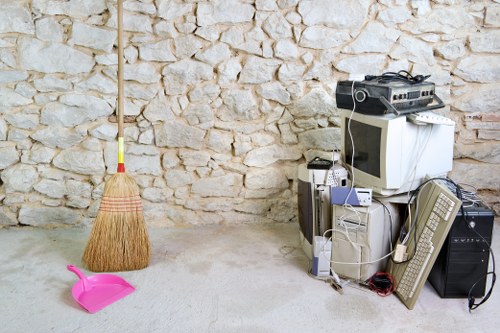
Furniture is often the largest part of a house clearance, so it helps to plan it separately. Sofas, wardrobes, tables, beds and cabinets can take time to move safely, especially in properties with narrow staircases, awkward corridors or limited parking. Our furniture clearance service is relevant when the main task is taking away large household pieces, while the furniture disposal page is useful if the focus is specifically on getting unwanted items removed from the property. The right choice depends on whether you are clearing one room, multiple floors or the whole home.
Bulky items may need dismantling or careful handling before removal. That applies to items with solid frames, attached sections or pieces that cannot be carried comfortably through a doorway. We approach those jobs in a way that supports the property as well as the furniture itself, aiming to avoid unnecessary scuffs or disruption. If the task includes storage spaces or outbuildings, it may be worth combining furniture removal with a broader clearance of the rooms around them.
Other clearances can be arranged when the property contains more than standard living-room or bedroom contents. For example, loft clearance is suited to items stored above the main living areas, while garage clearance may suit the removal of tools, boxes, seasonal items and old household overflow. These separate services help keep the work organised, particularly when different parts of the property contain different kinds of belongings and access conditions.
Preparing a quotation and planning access
A sensible quotation begins with a clear description of what needs to be cleared. In many cases, the easiest way to plan is to note the number of rooms, the main item types and whether there are any access issues such as stairs, restricted parking or narrow entrances. If you are able to identify items that must stay behind, that is helpful too. This sort of detail gives a more accurate picture of the work and helps avoid unnecessary confusion on the day.
To make the enquiry easier, it is useful to separate the items into broad groups rather than writing a long unstructured list. For example: furniture, general household contents, white goods, boxed storage and any items that need special attention. A short list like this can support a clearer discussion and make it easier to compare options if you are still deciding how much of the property to clear. When you are ready, ask for a quotation in plain terms and describe the rooms involved.
For local customers who want to understand pricing considerations before moving ahead, the pricing and quotes page offers a useful place to start. It sits naturally alongside the enquiry process, because the cost of a clearance usually depends on the amount of material, the ease of access and the overall scale of the work. Keeping those factors in mind early on makes the arrangement more efficient and less likely to need revision later.
Household waste, recycling and disposal choices

House clearance is not only about moving items out of a property; it is also about deciding what happens next. Some contents may be suitable for reuse, while other items need disposal as part of a responsible clearance. Our waste removal service can be relevant when the job involves mixed non-hazardous household waste alongside furniture and general contents. It provides a wider option for customers who want a single practical solution rather than arranging separate collections for different categories.
When a property contains items that no longer have a home inside it, sorting can make the overall work more efficient. It is often sensible to group recyclable materials, reusable household objects and general disposal items before removal begins. That approach can be especially helpful in properties with years of stored belongings, where there may be a mixture of packaging, everyday domestic waste, old decorations, paper goods and loose contents from cupboards or shelves. The more clearly these groups are identified, the easier the clearance is to manage.
For customers with a particular interest in responsible handling, our recycling and sustainability page sets out how we think about reuse and recycling as part of a broader clearance. If your property clearance includes items that are no longer needed but might still have a practical second life, it is worth considering that before everything is treated as general waste. The service remains focused on removing the contents, while still allowing for sensible decisions about material recovery where appropriate.
Outbuildings, storage areas and larger clearances
Some of the most demanding house clearance jobs in Hammersmith involve spaces that have collected items over a long period. Loft spaces, garages, spare rooms and sheds can hold an uneven mix of boxes, furniture, old appliances and seasonal belongings. These areas often need a slightly different approach from standard living rooms because access may be tighter and contents may be stacked more densely. The work is still domestic in nature, but the planning tends to benefit from a room-by-room assessment of what is stored where.
If the property includes a garage or a loft, you may find it useful to treat those sections as distinct parts of the clearance. That can help with sorting and also with deciding whether any contents should be left in place for later review. A good practical order is to clear the easiest-access items first, then move to heavier or more awkward storage. This approach keeps the job steady and helps avoid unnecessary disruption in areas that the homeowner or landlord still needs to use.
For customers who need something broader than a single room or storage area, the garage clearance and loft clearance pages describe those services in a way that makes comparison easier. They can be combined with a larger house clearance where useful, but they also stand alone if only one part of the property needs attention. That is often the simplest way to make a large job feel more manageable.
Business premises and mixed-property clearances

Although this page focuses on homes, some customers need a clearance approach that overlaps with workplace or mixed-use settings. A property may include a home office, a small backroom used for storage, or an area that contains both domestic and work-related items. In those cases, the best plan is to separate the contents by type and use, then decide whether the clearance should stay within a domestic scope or extend into a commercial one. That keeps the service practical and easier to describe.
For premises where the main issue is not household contents but desks, files, chairs or office equipment, the office clearance page is the more appropriate reference. If the clearance includes trade-like rubble, packaging or heavier work materials, the builders waste clearance page may also be relevant. We keep these options distinct because the contents, handling needs and disposal considerations are different, even when they arise at the same address.
About Hammersmith
Hammersmith is a well-known district in west London, situated on the north bank of the River Thames and long associated with crossing points, riverside movement and urban growth. The area takes its name from an old hammer smithing or iron-working connection, and its development has been shaped by transport, trade and later commercial expansion. Hammersmith Bridge, a Grade II* listed suspension bridge, remains one of the area’s most recognisable landmarks, linking the district to Barnes across the river and forming a distinctive feature of the local streetscape. The riverside itself is a major part of the area’s identity, with paths, embankments and waterside views giving the district a strong geographical focus that differs from the denser streets inland.
The built environment mixes older residential streets, civic buildings and later commercial development. Hammersmith Broadway is a central focus for movement and retail, while the nearby King Street corridor has long provided a spine for shops, services and public activity. The area is also known for cultural venues, including the Eventim Apollo, a major live-performance building that occupies a former cinema and remains a prominent part of local life. In the broader district, the River Thames, the bridge, and the network of transport connections all help define how Hammersmith functions as both a local neighbourhood and a busy part of west London. Green spaces such as Ravenscourt Park add contrast to the urban fabric, offering lawns, mature trees and a more relaxed setting within walking distance of main roads and stations.
When to choose a full or partial clearance

A full house clearance is usually the right choice when the aim is to empty most or all of the property, often before sale, letting or renovation. A partial clearance is better when the home still contains items that will remain in use, but some rooms or storage areas need to be reduced or stripped back. Both approaches can work well, but they require slightly different decisions about timing and the order in which rooms are tackled. Choosing the right scope early helps the job stay controlled and avoids removing things that should have been retained.
Customers often decide between the two based on the amount of furniture in place and how much sorting they want to do themselves. If the property contains a mixture of valuable, sentimental and disposable items, a partial clearance may suit the first stage of the work, with further removal arranged later. If the home is already emptying because of a move or tenancy end, a fuller clearance can be more efficient. The key is to set the scope around the property’s actual contents rather than trying to fit it into a fixed template.
When you are ready to move from planning to action, contact us to discuss the clearance and request a quotation for the work that needs doing. A brief description of the rooms, items and access is usually enough to start the conversation, and it gives us a sensible basis for shaping the service around the property. If you are still comparing options, you can also review the about us page for background and the insurance and safety page for practical reassurance about how the work is approached.
Supporting a tidy handover
Once the main clearance has been planned, the final stage is about leaving the property in a good state for whatever comes next. That might mean a clearer layout for cleaning, a more open space for decorating, or a more manageable environment for a sale or rental inspection. We aim to remove agreed items cleanly and in an orderly sequence so the home is left ready for the next step rather than cluttered with half-finished decisions. This stage is often where a sensible clearance proves its value.
Some customers prefer to keep a small set of items back until the last moment, particularly if they are sorting documents, keepsakes or pieces that will be passed to family members. That is entirely normal, and it is one reason why the work benefits from a clear division between items to keep and items to remove. Where necessary, the clearance can be organised around that separation so the remaining contents are not disturbed unnecessarily. It is a practical way to retain control while still getting the property cleared.
For a wider view of domestic and commercial arrangements, the business waste removal page can be useful if your needs extend beyond the home. If you want to compare a simple domestic clearance with other service categories, that page provides another route through the options without blurring the difference between household contents and business waste. A short call or message is often enough to decide which route is most suitable.
What affects the scope of a clearance
A house clearance is shaped by the contents, access and the amount of sorting involved. A property with straightforward access and a small number of large items can usually be handled differently from one with multiple floors, packed storage spaces and a wider range of mixed contents. This is why a clear description of the property helps more than a vague estimate. It lets the work be planned in a way that reflects the real task rather than an assumption about how long or simple it will be.
Other useful factors include whether items are loose or boxed, whether any larger furniture must be dismantled, and whether the rooms are fully furnished or only partly occupied. The presence of loft contents, garage overflow or mixed household waste can also change how the clearance is approached. None of these details are unusual; they simply help define the method. When the scope is understood properly, the service can be arranged in a way that feels more efficient and more predictable.
If you are preparing to move ahead, keep the enquiry brief but specific and ask for the next step in the process. That may be a follow-up discussion, a walk-through of the rooms or a quotation based on the details you provide. Either way, the aim is to make the clearance clear from the outset rather than leaving anything open to guesswork. Get in touch when you are ready to take that step.